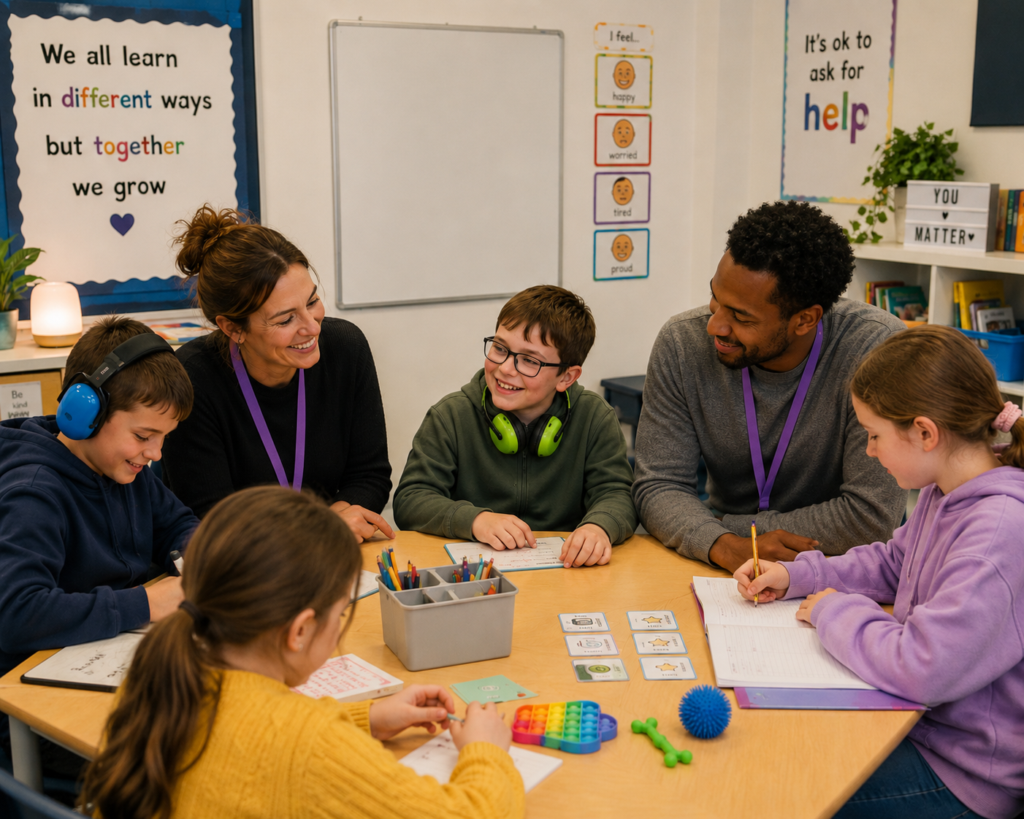
A child-centred approach recognises every child’s differences. Instead of expecting every young person to respond to the same support in the same way. At Lexia we want to fully understand these children’s needs, and be there to support them in such an important stage of their lives.
For some children, the answer may be more structure. For others, it may be movement, creativity, extra time with a trusted mentor/tutor.
When the right support is put in place, progress is made.
What Is a Child-Centred Approach?
A child-centred approach places the individual young person at the heart of every decision about their education and support.
It means taking time to understand:
- How the child communicates
- What helps them feel comfortable
- What may be preventing them from engaging
- Which interests encourage their participation
- What success looks like for them
This does not mean removing expectations. It means creating a realistic path that helps the child move towards them.
The Education Endowment Foundation describes individualised instruction as support tailored to each learner’s needs, activities and pace. Its evidence review associates this approach with an average of four additional months of progress, although the current evidence base is limited.
Why a Child-Centred Approach Matters
When a young person feels unheard, misunderstood or overwhelmed, learning can become another source of pressure.
A child who appears unwilling to complete a task may be struggling to understand the instructions. A young person who leaves the classroom may be responding to noise, anxiety or difficult past experiences. Another may have stopped trying because they no longer believe they can succeed.
Behaviour often tells us something that words cannot.
A child-centred approach looks beyond the surface. It asks what the child may be communicating and what needs to change around them.
This helps young people feel:
- Seen as an individual
- Safer around trusted adults
- More involved in their own learning
- Able to take manageable steps
- Proud of their progress
Once trust begins to grow, engagement often follows.
How Lexia Puts Individual Needs First
At Lexia Education Services, support begins with the young person.
Our mentors and tutors work to understand each child’s needs, interests, experiences and goals. We know that a young person is more likely to engage when they feel that the adult supporting them genuinely understands their world.
That may mean connecting through sport, creative activities or a shared interest. It may mean slowing the pace down, changing the environment or helping a young person manage emotions before focusing on academic work.
Lexia’s mentoring combines emotional and educational support with positive role models, practical guidance and opportunities to build communication, problem-solving and resilience.
Our face-to-face provision supports young people with a wide range of needs, including Social, Emotional and Mental Health needs, neurodiversity, learning difficulties and experiences of being in care.
Better Education Starts with the Child
For the education system to improve and evolve, it must respond to the children within it.
Consistency and clear expectations remain important. However, fairness does not always mean giving every child the same thing. It means giving each child the support they need to participate and progress.
This requires schools, families, mentors, tutors and local authorities to work together. It also means listening to the voice of the child rather than making every decision around them.
Current government proposals for SEND reform also emphasise early identification, targeted support and strengthening the ability of education settings to meet varying needs.
A stronger system would:
- Identify needs before they become crises
- Give staff time to build meaningful relationships
- Include children in decisions about their support
- Adapt learning without lowering aspirations
- Recognise emotional progress alongside academic results
Children should not have to reach breaking point before receiving help.
Why Relationships Make the Difference
A support plan can set out what a child needs, but a trusted relationship helps bring that plan to life.
The Education Endowment Foundation reports that mentoring can have a positive effect on attainment, attitudes towards school, attendance and behaviour. It also highlights the importance of maintaining consistent support so that improvements in confidence and behaviour can last.
At Lexia, relationships are not treated as an extra part of the work. They are central to it.
A mentor who listens, remains consistent and notices small changes can help a young person begin to treat themselves differently.
That change may seem small, but it can open the door to learning.
Putting Needs First Helps Potential Grow
Every young person deserves an education that recognises their needs while continuing to believe in their potential.
When we listen first, build trust and shape support around the individual child, success becomes more achievable. It may begin with attending one session, completing one task or trusting one adult. Those steps matter.
Lexia works alongside schools, local authorities, parents and carers to provide bespoke mentoring and tutoring for vulnerable young people across South West England.
To explore how child-centred mentoring or tuition could support a young person, start a conversation with the Lexia team.