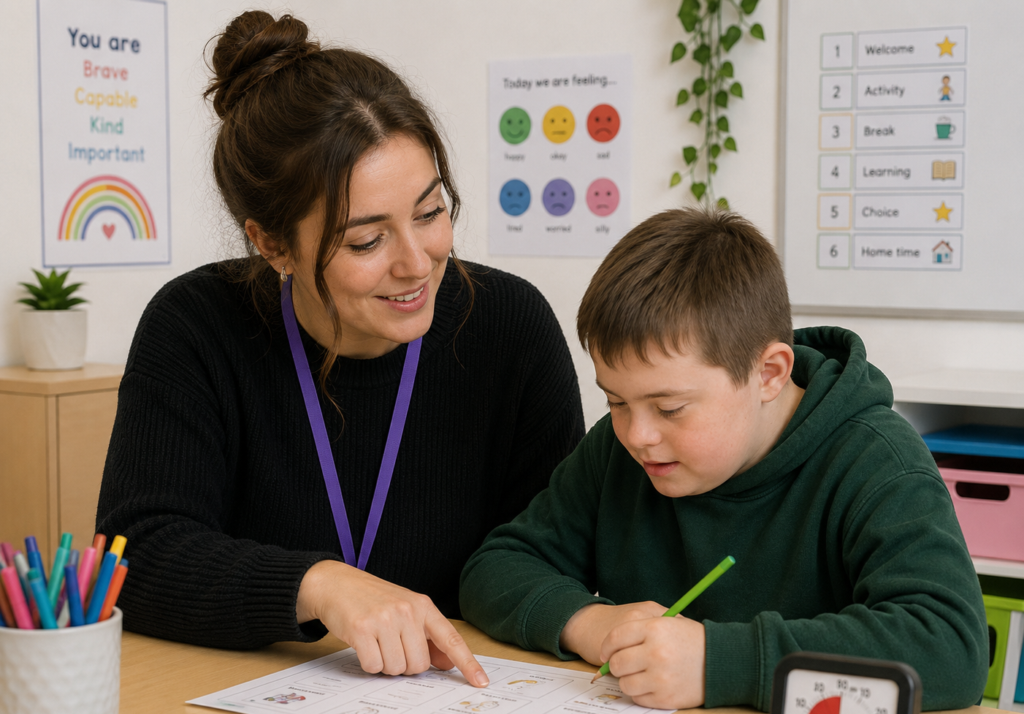
The importance of SEN tuition lies in its ability to give each young person learning support that reflects their individual needs. In a busy classroom, it may not always be possible to adjust every task, explanation or learning environment fully.
Specialist tuition creates space for a different approach. Lessons can be delivered at an appropriate pace, barriers can be identified early, and progress can be measured against realistic personal goals.
For schools, local authorities and families, the right tuition programme can provide a structured route back into learning. Those looking for tailored educational support can explore the tutoring services available through Lexia Education Services.
What Is SEN Tuition?
SEN tuition is personalised educational support for children and young people with special educational needs.
It may support learners with:
- Autism
- ADHD
- Dyslexia or dyscalculia
- Speech, language and communication needs
- Social, emotional and mental health needs
- Cognition and learning difficulties
- Sensory or physical needs
Tuition may take place alongside school, during a period away from school or as part of an alternative provision package.
Rather than applying one fixed teaching method, a specialist SEN tutor adapts the content, pace and delivery of each session. This can include using visual resources, practical activities, movement breaks, clear routines or shorter learning tasks.
Why Is SEN Tuition Important?
More than 1.8 million pupils in England were identified as having SEN in the 2025/26 academic year. This included 538,547 pupils with an Education, Health and Care plan and almost 1.32 million receiving SEN support without one.
These figures demonstrate the scale and variety of need across education. They also show why flexible support must be available for young people who find standard classroom learning difficult to access.
SEN tuition is important because it focuses on the learner rather than expecting the learner to fit a single system. It allows the tutor to understand what is preventing progress and make practical adjustments.
Personalised Learning Reduces Barriers
A young person may understand a subject but struggle to show that understanding in a traditional lesson. They might need more processing time, clearer instructions or a quieter environment.
Personalised SEN tuition allows these needs to be addressed directly. A tutor can break larger tasks into manageable stages, revisit key ideas and explain a topic in several ways.
The aim is not to remove challenge. It is to make the challenge accessible. When work is pitched at the right level, learners can develop their knowledge without becoming overwhelmed or disengaged.
SEN Tuition Can Improve Engagement
Engagement is often one of the first areas that specialist tuition must address. Some young people have experienced repeated difficulty, disrupted education or long periods when learning felt inaccessible.
A consistent tutor can establish clear expectations and a predictable routine. This helps the learner understand what each session will involve and what they are working towards.
Interests can also be used to make learning more relevant. For example, numeracy may be taught through budgeting, sport or cooking. Literacy activities may be linked to topics that the young person already enjoys.
These approaches maintain academic purpose while making participation more achievable.
Supporting Academic Progress
One-to-one tuition gives a tutor time to identify specific gaps in knowledge and provide immediate feedback.
Research from the Education Endowment Foundation suggests that one-to-one tuition can produce approximately five additional months of progress on average. The evidence also indicates that tuition is most effective when it is targeted, linked to wider learning and regularly monitored.
Progress will look different for every learner. It may include:
- Completing a full learning activity
- Improving reading fluency
- Developing functional maths skills
- Working towards a qualification
- Increasing concentration
- Re-engaging with a school timetable
Clear starting points and regular reviews help ensure that tuition remains focused on meaningful outcomes.
What Makes SEN Tuition Effective?
Effective SEN tuition requires more than subject knowledge. Tutors must understand how additional needs can affect communication, attention, emotional regulation and readiness to learn.
A strong programme should include:
- An initial assessment of needs and current attainment
- Clear academic and engagement targets
- Appropriate tutor matching
- Flexible lesson planning
- Regular progress monitoring
- Communication with families and professionals
- Consistent safeguarding procedures
Continuity is also important. Working regularly with the same tutor can reduce uncertainty and give the young person time to become familiar with the learning process.
SEN Tuition at Lexia Education Services
Lexia Education Services provides face-to-face tuition for children and young people with needs including neurodiversity, social, emotional and mental health needs, and cognition and learning difficulties. Lexia is also listed as an approved provider on Somerset Council’s Alternative Provision Framework.
Lexia’s tuition is child-led, trauma-informed and focused on agreed outcomes. Programmes can be aligned with a learner’s Education, Health and Care plan, academic targets and wider support arrangements.
Qualified teachers complete baseline assessments and adapt sessions according to the learner’s progress, engagement and interests. Weekly reporting supports communication between families, schools, commissioners and other professionals.
This coordinated approach helps ensure that tuition is not treated as a separate activity. It becomes part of a clear plan for education, development and future progression.
When Should SEN Tuition Be Considered?
Specialist tuition may be appropriate when a young person:
- Is falling behind despite existing support
- Cannot currently access a full school timetable
- Experiences anxiety around classroom learning
- Requires support linked to an EHCP
- Is preparing to return to school or college
- Needs targeted help with English, maths or Functional Skills
- Benefits from a quieter and more personalised environment
Early support can prevent smaller learning gaps from becoming more difficult to address. However, tuition can also be valuable after a longer period of disruption.
Creating a More Accessible Route to Learning
The importance of SEN tuition extends beyond completing worksheets or improving test results. Its purpose is to make education accessible, structured and relevant to the individual learner.
With appropriate assessment, consistent teaching and close communication, tuition can help a young person develop skills, recognise progress and move towards their next stage of education.
Lexia Education Services works with schools, local authorities, parents and carers to provide personalised tutoring support across South West England. To discuss a learner’s circumstances, contact Lexia’s team and begin a conversation about the most suitable provision.