The importance of community culture can be felt in every part of a child’s school experience. It is present when a pupil is greeted by name, when an adult notices they are having a difficult day, and when they feel safe enough to ask for help.
For children who have experienced disruption, exclusion or challenges with their mental health, that sense of community can be especially important.
At Lexia Education Services, community culture shapes how our mentors and tutors support young people, work alongside schools and learn from one another.
What Community Culture Means?
Community culture is the shared feeling that people belong, support one another and work towards a common purpose.
In a school, it grows through everyday experiences. It is not limited to assemblies, events or posters on the wall.
Children notice community through:
- Consistent routines and expectations
- Positive relationships with trusted adults
- Opportunities to express their views
- Support that respects their individual needs
- Staff who communicate and work together
- Celebrations of effort, progress and identity
The Education Endowment Foundation explains that a supportive school environment should reinforce shared language, routines and approaches. It also highlights the importance of positive relationships between pupils and adults. help children understand what to expect and who they can turn to.
Why Community Culture Matters for Children
A child may enter school carrying worries that are not immediately visible. They may be dealing with anxiety, family difficulties, unmet special educational needs or previous experiences of rejection.
Without trusted relationships, that child may withdraw, avoid learning or communicate distress through their behaviour. With the right community around them, they have a stronger chance of feeling safe enough to participate.
A positive community culture can help children:
- Build confidence and self-belief
- Develop healthy relationships
- Feel more connected to school
- Ask for support before difficulties escalate
- Re-engage with education
- Recognise their own strengths
Government attendance guidance shared through a school case study identifies belonging as central to improving attendance. The school featured in the guidance focuses on inclusion, supportive relationships with families and helping new pupils settle quickly. remove every barrier. However, it can give a young person a secure starting point from which progress becomes possible.
Building Community Culture in Schools
Strong school communities are built when responsibility is shared.
Teachers, leaders, pastoral staff, mentors, tutors, families and pupils each see a different part of a young person’s experience. When those people communicate effectively, support becomes more consistent.
For example, a mentor may notice that a pupil finds unstructured times difficult. A tutor may discover that the same pupil avoids written work because they fear getting it wrong. School staff can then use both insights to create a more supportive plan.
Useful community-building practices include:
- Welcoming pupils personally each day
- Creating regular opportunities for pupil voice
- Sharing successful support strategies
- Recognising progress beyond academic results
- Responding to behaviour with curiosity
- Keeping families informed and involved
- Providing calm spaces for regulation and reflection
The aim is not to expect every child to respond in the same way. It is to create a culture flexible enough for every child to take part.
How Lexia Mentors Strengthen Community
Lexia mentors build meaningful connections with young people while offering emotional and practical guidance. They act as consistent role models, helping pupils develop confidence, resilience and aspirations. a mentor becomes the adult who helps them reconnect with the wider school community.
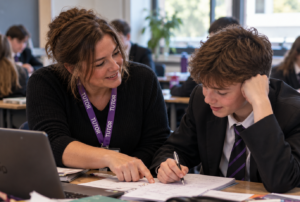
This can begin with something simple: a calm conversation, a shared activity or an adult remembering what the young person said the day before. Over time, these moments create trust.
Mentors can also help pupils practise communication, understand their emotions and manage situations that previously felt overwhelming. Their work supports the child while strengthening the relationships around them.
How Lexia Tutors Create Belonging
Tutoring is not only about completing more work. A child must feel safe enough to make mistakes before meaningful learning can happen.
Lexia tutors offer personalised academic support through trauma-informed teaching and a relational approach. Sessions are shaped around each learner’s needs, helping them build understanding and confidence at a manageable pace. s to community culture by showing a young person that learning can feel different. They listen, adapt and recognise progress that others may not yet see.
Lexia works with schools, local authorities, parents and carers to provide mentoring and tutoring support for vulnerable young people across South West England. Its wider community includes more than 500 mentors and tutors, supporting over 1,000 young people each week.
Community Culture Within Lexia
Community matters for mentors and tutors too.
Practitioners need opportunities to reflect, develop their knowledge and feel connected to a shared purpose. When adults feel supported, they are better placed to provide the dependable relationships vulnerable young people need.
Lexia invests in practitioner training, professional development and a collaborative network. This helps mentors and tutors continue learning while recognising that they are part of something bigger than one individual session.
Creating a Community Where Children Belong
Community culture is built through repeated, dependable actions. It grows when adults listen carefully, communicate openly and refuse to define a child by their most difficult moment.
For schools, it creates stronger connections around pupils. For mentors and tutors, it provides a shared sense of purpose. For children, it can be the difference between feeling overlooked and feeling understood.
Every young person deserves a community that recognises their potential and helps them move forward.