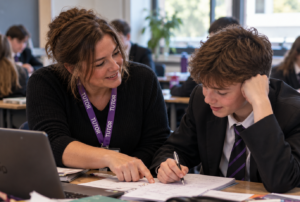
Mentoring gives young people with SEN or SEMH, support that is unique to the sector: tailored, individual support from an adult who is trained to do so.
As demand for alternative and specialist education grows, settings are being asked to support more pupils with complex needs. Teachers and support teams work incredibly hard, but they cannot always provide the regular one-to-one time each pupil needs.
That is where skilled mentors can make a meaningful difference.
For settings looking to strengthen their pastoral support, Lexia’s mentoring services provide trained mentors who can work alongside existing education teams.
The Rise in Alternative Provision
Alternative provision supports children and young people who may not be able to access mainstream education. This can include pupil referral units, alternative provision academies, free schools and other specialist placements.
The number of pupils attending local-authority-funded alternative provision reached 47,600 in 2023/24, an increase of 16% in one year. The number of pupils with an open alternative provision placement had also more than doubled since 2017/18. this not only about the number of registered settings. It is also about rising demand for placements, specialist support and flexible education.
In 2025/26, the number of pupils in state-funded and non-maintained special schools increased by 4.8% to 178,000. England also had 12 more state-funded special schools than the year before. ame time, more than 1.8 million pupils in England were identified as having special educational needs in 2026. The number of pupils with an Education, Health and Care plan rose by 11.6% in one year to 538,500. Figures point to a clear need: more young people require education that can respond to their individual circumstances.
Why Mentoring in Alternative Provision Matters
Alternative provision is not simply a different place to complete schoolwork. For many pupils, it is an opportunity to rebuild their relationship with education.
Before learning can happen, a young person may need to feel safe, respected and understood.
A mentor can provide a steady relationship that helps a pupil:
- Talk through challenges without feeling judged
- Recognise emotions and develop ways to manage them
- Set realistic personal and educational goals
- Build confidence through small, visible achievements
- Improve communication with staff and other pupils
- Reconnect with learning at a manageable pace
Mentoring does not replace teachers, therapists, family support workers or safeguarding professionals. It adds another trusted person to the team around the young person.
That consistency matters, especially when a pupil has experienced several changes in schools, professionals or placements.
In 2023/24, there were 955,000 school suspensions in England, an increase of 21% from the previous year. Permanent exclusions rose by 16% to 10,900. Pupils with special educational needs and those eligible for free school meals continued to experience some of the highest suspension and exclusion rates. Behind every figure is a young person whose education has been interrupted. Mentoring can help prevent that interruption from becoming part of how they see themselves.
Growing Needs Require More Mentors
The number of children and young people with an EHC plan attending alternative provision increased by 13% between 2025 and 2026.
Among pupils with EHC plans in alternative provision, social, emotional and mental health needs were the most common primary area of need, accounting for 63% of the group. young people may need more than academic instruction. They may need help understanding their emotions, creating healthy routines, managing relationships and believing in themselves.
A mentor can create space for this work without placing additional pressure on classroom staff.
Effective mentoring can also give education teams greater insight into what sits behind a pupil’s behaviour. A young person who appears unwilling to engage may be worried about failure. A pupil who becomes angry quickly may be struggling to explain that they feel overwhelmed.
Mentors are there to notice those patterns and help those young people find a safer way to communicate what they need.
What Effective Mentoring Looks Like
Good mentoring in alternative provision should be structured, safe and centred on the individual young person.
It includes clear boundaries, regular sessions, safeguarding awareness and close communication with the setting. It should also recognise that progress will look different for every pupil.
For one young person, progress may mean returning to a full lesson. For another, it may mean asking for help before becoming overwhelmed. Both steps matter.
Mentors should not enter a setting with assumptions about a pupil. They should listen, remain consistent and help the young person identify strengths that may have been overlooked.
How Lexia Supports Alternative Settings
Lexia Education Services is an alternative provision and specialist mentoring organisation supporting vulnerable young people through consistent, relationship-led mentoring.
Because we understand the realities of alternative education, our mentors do not arrive expecting every young person to respond in the same way. They work alongside the setting, building support around the pupil’s needs, goals and existing plans.
Lexia can place mentors within alternative provisions and specialist settings to provide:
- One-to-one mentoring sessions
- Emotional wellbeing and confidence support
- Help with engagement and attendance
- Behaviour and emotional regulation strategies
- Support with personal goals and future planning
- Consistent communication with education staff
Our aim is not to take over the work already happening within a setting. It is to strengthen it.
By placing mentors directly into provisions, we help create more opportunities for pupils to be supported. We also help staff maintain a team environment around each young person.
Building Support Around Every Pupil
The rise in alternative and specialist education reflects a growing need for flexible, individual support.
Alternative provisions cannot meet that need through curriculum changes alone. Young people also need relationships that help them feel safe enough to participate, reflect and try again.
With the right mentor, a pupil can begin to see that one difficult period does not define their future.
At Lexia Education Services, we are committed to working alongside alternative provisions and special schools to make that support available.