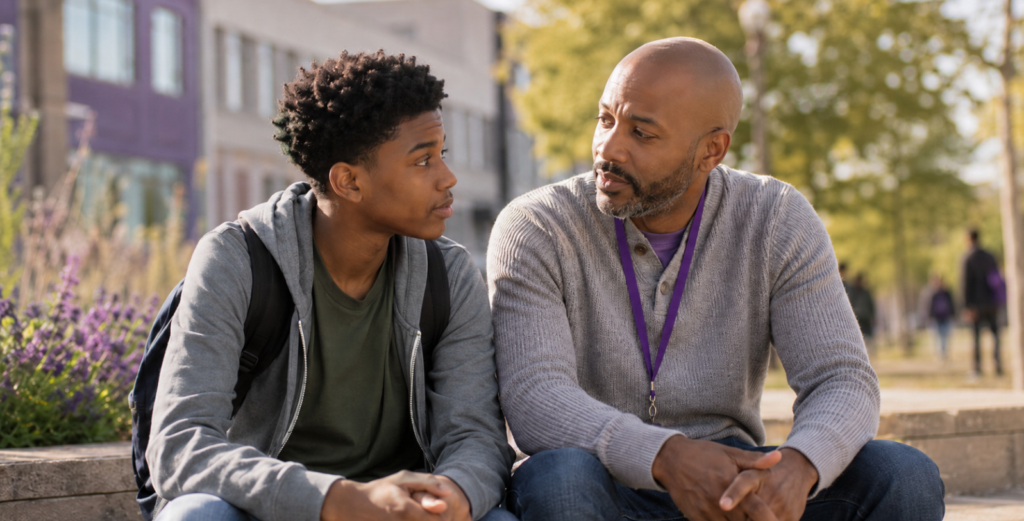
Every young person needs to feel safe before they can truly grow.
Not just physically safe, but emotionally safe too. Safe to speak. Safe to make mistakes. Safe to say, “I’m not okay.” For many children and young people, this kind of safety is not always easy to find.
Some may face stress at home. Some may struggle in school. Some may be exposed to violence, self-harm, bullying, pressure from peers, or negative influences in their local area or online.
This is where mentoring can make a powerful difference.
At Lexia Education Services, we know mentoring is not only about helping a young person improve behaviour, attendance, or confidence. It is also about helping them stay safe, feel seen, and build the tools they need to make better choices.
This is exactly why we do what we do – NSPCC guidance on keeping children safe
Why Safety Comes Before Progress
A young person cannot focus well when they feel unsafe.
If they are worried about what is happening at home, scared of someone in their community, overwhelmed in class, or carrying thoughts of self-harm, learning becomes harder. Trust becomes harder. Hope can feel far away.
Mentoring gives young people a steady space where they can slow down and talk without fear of being judged.
A mentor can help a young person:
- Understand what they are feeling
- Recognise unsafe situations
- Build confidence to ask for help
- Make safer choices around friends and peers
- Feel less alone when life feels heavy
- Know who to speak to when things become serious
This support does not replace safeguarding, therapy, family care, or school support. But it can sit alongside them in a very human way.
A mentor may notice small changes others miss. A quieter mood. A sudden drop in confidence. Anger that feels bigger than usual. A young person pulling away from people they once trusted.
These signs matter.
Mentoring and Protection From Violence
Some young people grow up around conflict, aggression, or violence. This could be in the home, at school, in the community, or through peer groups.
When violence becomes normal around a child, it can shape how they see themselves and others. They may start to believe that shouting is the only way to be heard, or that fear is just part of life.
A trusted mentor can gently challenge this.
Mentoring helps young people understand that they have choices. It helps them talk through risk, pressure, anger, and fear before those feelings become actions.
For a child who has seen or experienced violence, a mentor can be a calm and consistent adult who says, through actions as much as words:
“You matter. Your future matters. There is another way forward.”
That message can stay with a young person for life.
Supporting Young People Around Self-Harm
When a young person is thinking about self-harm, they are often trying to cope with emotional pain they do not know how to express.
They may feel ashamed, frightened, or unsure how to tell anyone. They may worry they will be punished, misunderstood, or treated differently.
Mentoring can create a safe route into support.
A mentor is not there to diagnose or fix everything. But they can listen carefully, take concerns seriously, follow safeguarding steps, and help the young person connect with the right adults and services.
Most importantly, a mentor can help a young person feel that their pain is not something they have to carry alone.
Through steady conversations, they can support healthier coping strategies, such as:
- Naming emotions
- Using grounding techniques
- Building a trusted support circle
- Creating safety plans with the right professionals
- Finding positive outlets like music, sport, writing, or movement
For some young people, being heard early can change everything.
Home, School, and the Pressure in Between
Children do not live in one world. They move between home, school, friendships, online spaces, and the wider community.
Each space can bring different pressures.
At home, a young person may be dealing with family stress, caring responsibilities, conflict, loss, or instability. At school, they may face bullying, exclusion, learning difficulties, sensory overload, or the pressure to keep up.
Some children feel they have to be one version of themselves at home and another at school. That can be exhausting.
Mentoring gives them a place to make sense of it all.
A mentor can help a young person talk about what feels hard in each environment. They can help them prepare for tricky moments, practise communication, and understand what support they are allowed to ask for.
This can be especially important when adults only see one part of the child’s life.
Why SEN and SEMH Support Matters
Young people with SEN or SEMH needs may find certain environments much harder than others.
A busy corridor might feel overwhelming. A loud classroom might feel unsafe. A sudden change in routine might cause panic. A friendship issue might feel impossible to process. A child who looks “angry” may actually be anxious, confused, or overstimulated.
Without the right support, these young people can be misunderstood.
They may be labelled as difficult when they are really struggling. They may be punished for behaviour that is communicating distress. They may stop trusting adults because they feel no one understands what life feels like for them.
Mentoring can help bridge that gap.
A skilled mentor takes time to understand the young person beneath the behaviour. They look at what is happening before, during, and after difficult moments. They help the young person build language for their needs and confidence in who they are.
For a child with SEN or SEMH needs, that can be life-changing.
Keeping Young People Away From Negative Influences
Not every risk is obvious at first.
A young person may be drawn towards people who offer quick belonging, status, money, attention, or escape. This can include harmful friendships, online exploitation, substance use, gangs, bullying, or risky behaviour.
Often, young people are not looking for danger. They are looking for connection.
Mentoring helps them find that connection in safer ways.
A mentor can help a young person ask:
- Does this person care about my future?
- Do I feel safe around them?
- Am I being pressured to do things I do not want to do?
- Who can I speak to if I feel trapped?
- What kind of person do I want to become?
These questions can help young people pause before making choices that may affect their safety, education, and future.
The Child Today Becomes the Adult Tomorrow
Every conversation matters.
The way a young person is supported today can shape how they handle stress, relationships, conflict, work, and parenthood in the future.
When a child feels safe, they are more likely to believe they have value. When they feel heard, they are more likely to speak up. When they are guided with care, they are more likely to make choices that protect their future.
Mentoring helps young people build more than confidence. It helps build identity.
It can support them to become adults who understand their emotions, respect boundaries, ask for help, and believe they can create a life beyond the challenges they have faced.
That is not small work. It is future-shaping work.
Safety Is the Starting Point
Mentors keeping young people safe is not just about responding when something goes wrong.
It is about building trust early. It is about noticing the quiet signs. It is about helping young people feel strong enough to choose safety, even when the world around them feels uncertain.
At Lexia, we believe every young person deserves a steady adult who sees their potential, protects their dignity, and helps them move towards a safer future.
To explore how mentoring could support a young person in your school, service, or care setting, you can book a free conversation with Lexia.